
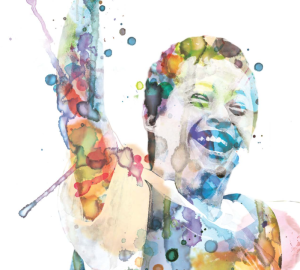
Lauren Fayerman is not your idea of the typical professional dancer. Although Fayerman, who has Down syndrome, might face different challenges than other dancers, her passion for the craft has no difference from that of her fellow dancers. Ever since her childhood, Fayerman, now 24, always knew she wanted to be on stage, and she has not let anything hold her back.“Five, six, seven, eight,” are the words that signify the beginning of a dance sequence. A dance instructor or choreographer recites the phrase to alert dancers that the choreography is about to begin. The phrase is used solely during the lengthy, daylong or late-night rehearsals, where a dancer spends most of his or her career preparing for those brief yet glorious moments on stage during a performance. “Five, six, seven, eight,” will silence a room and inspire a dancer to perform better than ever before. After years of dancing, these four numbers are almost part of a dancer’s DNA. No matter where dancers are, or what they are doing, “five, six, seven, eight,” will always be four little numbers with a deep connection to their lives. Fayerman has felt this connection since the moment she’s stepped foot on a dance floor. It’s one of the main forces in her life, inspiring her to pursue dancing professionally.“I’ve been dancing my entire life. It’s awesome,” Fayerman said. She has spent more than 20 years learning different dance styles at studios in her hometown of Palm Beach, Fla. Rather than abandon her love for dance after graduating from high school, she decided to turn her passion into her profession and auditioned for the dance department at Palm Beach Atlantic University in Florida. Like any aspiring professional dancer, she was shocked but excited to have been accepted to the program.
On her first day of dance class at Palm Beach Atlantic University, Fayerman knew that she was different from every dancer in the classroom. It was not just that she had been home-schooled for 10 years and had never attended a high school. Fayerman has Down syndrome, and it’s unusual to find a person with Down syndrome pursuing a career as a professional dancer. But Fayerman and her classmates found that they had more similarities than differences. Their love for dance and God brought them together in various ways.
Common campus bond
Palm Beach Atlantic University is a comprehensive interdenominational Christian university, according to the school’s website. It is a relatively small campus of 3,663 students, making it easier to form a tightly knit friend group. Fayerman did just that by forming bonds with not only dance major students but also students of other academic majors.
“I can say I feel like I know half the people on this campus now,” Fayerman said.
Many of the students who choose to attend Palm Beach Atlantic base their decision on the Christian focus of the university. Adrienne Ming, a junior in the dance program, said she was looking for a Christian university that stressed Christian values and also had a strong dance program. She found Palm Beach Atlantic to be the perfect fit, since it is one of only three schools in the Council for Christian Colleges and Universities that offers a dance major.
Students in the dance program connect through their mutual love for dance and God and often choreograph and perform with their Christian faith in mind. That is exactly what Fayerman wanted to do upon arriving at Palm Beach Atlantic.
Crafting a skill
Fayerman said having Down syndrome never deterred her from achieving her dreams of becoming a professional dancer. She wanted to be trained by professionals from all over the world and perform on some of the world’s best-known stages. Before applying and auditioning for the dance program at Palm Beach Atlantic University, Fayerman knew she would need to take her dancing to another level. She joined the well-known Demetrius Klein Dance Company of Lake Worth, Fla.
Demetrius Klein is an international performer and choreographer with a strong resume of choreographed, performed and produced pieces. The company’s dancers also have international training and performance experience.
Interacting and dancing with the professionals of the company inspired Fayerman to continue chasing her passion. She took classes in modern dance and ballet and danced with both the adult and high-school level companies to gain more experience. It was here that Fayerman perfected her skills as a dancer and gained the confidence to consider auditioning for Palm Beach Atlantic University’s dance program.
“I owe my acceptance to the dance program at PBA to Demetrius Klein Dance Company.” Fayerman said.
Competitive environment
The dance courses at Palm Beach Atlantic proved difficult for every dancer in the program. Classes fostered some competition. At times, other dancers were not very welcoming or kind to each other. Friendships did not always grow in the dance room, and when “five, six, seven, eight,” was heard, the competition between students intensified. Fayerman said fellow dancers were not always very nice to her. She felt as though the competition aspect made it harder for dancers in the program to become friends with one another. At times, it created a tense environment that made it difficult for dancers to enjoy class. Ming said sometimes some fellow dancers in the program wouldn’t even reply to a friendly “Hello.” To both Ming and Fayerman, it seemed that some dancers had forgotten the bond they made through dance and faith.
Fayerman dedicated herself to proving she can compete with the best of the best in the dance program. She knew her love for dance was too important ever to walk away from.
“It started off tough with some of the really competitive and unfriendly dancers, but now we have a really great group of people,” Fayerman said.
Toughing it out
A symptom of Down syndrome includes intellectual or learning disabilities that cause people to learn at slower rates than their peers. At times, Fayerman said she would forget parts of choreography right after it was taught to her.
“Sometimes I forget what I’m doing and have to ask if we could go back a few steps,” Fayerman said. “I didn’t want to slow class down or anything though.”
Memorizing choreography proved even more difficult for Fayerman when she was stressed about classes and exams. Stress and anxiety can add to the difficulties a person with Down syndrome experiences.
“Sometimes it got tough, but I just pushed through it,” Fayerman said. “Nothing was going to stop me.”
Thinking ahead
Although she endured some difficulties in her first two years at Palm Beach Atlantic, Fayerman had many experiences to celebrate as well. She joined the dance department’s audition-only ensemble company, attended dance festivals and intensives and decided to pursue a dual degree in teaching and performance within the dance department. She wanted to secure her chances of finding a job after graduation.
“If performing is not possible after graduation, I’ll still be able to be a dance teacher,” Fayerman said. “I wanted to have a dual degree in the teaching and performance tracks so that I can be a dance instructor as well.”
Fayerman said that after college, she plans to teach at a local dance studio in the West Palm Beach area until she and her best friend, a Palm Beach Atlantic dance program alumna, can start their own dance studio and company. The two friends met before college while dancing together at a studio and have been planning to open their own studio ever since. Fayerman wants to teach and choreograph for all levels and eventually have her own dance company.
As part of her dance teaching courses, Fayerman has learned the many elements that go into a performance, including how to produce a performance on her own.
“I’ve learned about the lighting, music and a bunch of things for putting the show together,” Fayerman said.
Taking center stage in more ways than one
As a senior, Fayerman was required by Palm Beach Atlantic’s dance department to produce her own multiple-piece performance as her final project toward graduation at the end of 2012. The performance was Fayerman’s chance to combine everything she has learned in her years at Palm Beach Atlantic and produce a show for her family, the community, students, professors and the head of the school’s dance department.
The final project was designed, choreographed, themed and coordinated solely by Fayerman. She was responsible for selecting and editing her music, choosing the show’s lighting, developing the theme of the show and selecting the dancers she wanted in her production. The project was a sequence of pieces choreographed by Fayerman alone, and ran for an hour and 15 minutes. As part of the project, Fayerman was also required to perform in her own production. Despite all her responsibilities, Fayerman was excited about putting all of her ideas into the production.
Fayerman had been planning her senior project for nearly a year. She began contacting the 12 dancers, Palm Beach Atlantic University dance majors, during the spring 2012 semester and began teaching her choreography soon after.
Celebrating differences
Fayerman said her overall goal was to emphasize her uniqueness. Fully aware that she is a distinctive member of the dance program at Palm Beach Atlantic, Fayerman wanted to celebrate her pride in being different.
“Everything’s different from what people have seen before,” she said. “I’m an original and unique person, so everything needed to be original.”
Fayerman’s dedication to standing out even showed in her costume planning.
“I’ll go to stores and make every costume piece by piece, really specific,” she said. “ I wanted everything to be brightly colored.”
Bright colors not only fit with Fayerman’s “one of a kind” costumes, but also with the title and theme of her production, “The Light.” Fayerman said “The Light” refers to her Christian faith.
“When I was younger and I was getting baptized, I remember thinking that Jesus is my light,” Fayerman said. “That has stayed with me my whole life.”
Fayerman said other Bible verses mentioning light also played a significant role in her life, her dancing and the development of her show’s theme. Fayerman wanted to make her production a full representation of her faith and an appreciation of her uniqueness.
Fayerman said the support of her family has also played an important role in her life. She was excited to show her family all the hard work that she has put into her dance career and final project.
The home stretch
As the Dec. 7, 2012 performance date approached, Fayerman’s rehearsals began to intensify and lengthen. In the weeks leading up to Fayerman’s final project, rehearsals consisted of full run-throughs, dress rehearsals and technical rehearsals. Just days before the show, rehearsals were held for about six to seven grueling hours but the dancers were ready to perform. Fayerman was working for a perfect show.
Instead of hearing the words “five, six, seven, eight,” over and over during long rehearsals, Fayerman had the opportunity to be the one saying them, to a room full of dancers. Her final project was the first of what Fayerman hopes will be many successful productions made entirely by her. She hopes to keep the words “five, six, seven, eight” in her life forever.
“I’m really proud of my show, ” Fayerman said.